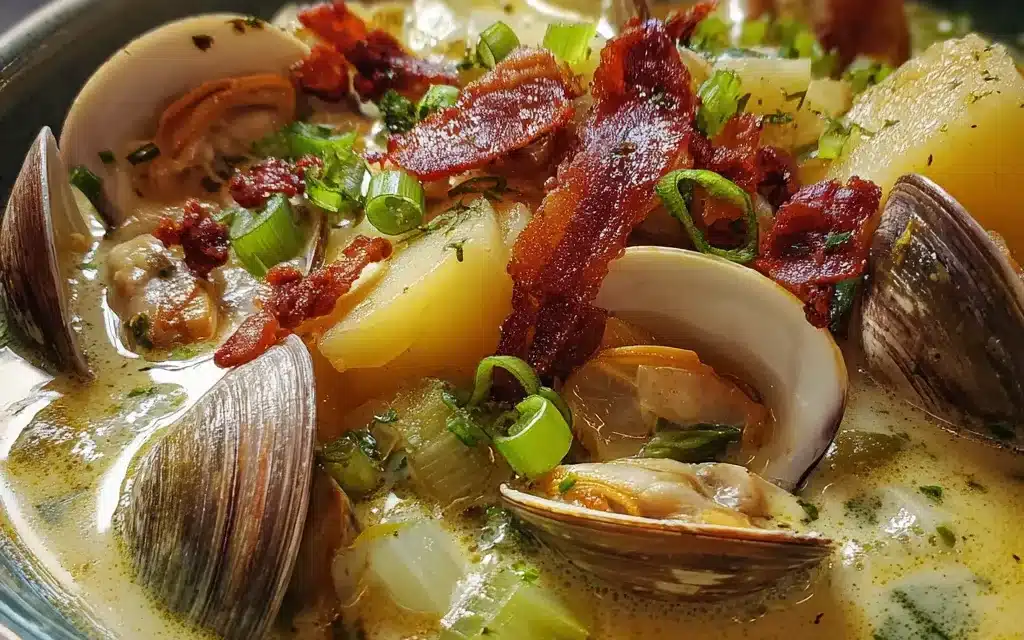
My grandmother’s Sustainable Clam Chowder was the stuff of legends. As a kid, I can still remember the anticipation building as she’d prepare it – the salty aroma of the clams, the savory scent of the bacon, and the comforting warmth that filled the entire house. It was a dish that brought our family together, no matter what was going on in our lives.
Grandma would spend hours carefully sourcing the freshest, most sustainable clams she could find, supporting local fishermen and ensuring our chowder was as eco-friendly as it was delicious. And when she’d ladle that rich, creamy broth into our bowls, topped with tender potatoes and chunks of clam, it was like being wrapped in a warm hug. To this day, that flavor transports me right back to her kitchen, surrounded by loved ones.
That’s why this Sustainable Clam Chowder recipe has become my go-to – it’s not just a dish, it’s a cherished tradition. And I’m thrilled to share the secrets behind making it truly special.
Why This Sustainable Clam Chowder Recipe Will Become Your Go-To
The Secret Behind Perfect Sustainable Clam Chowder
What sets this Sustainable Clam Chowder apart is the careful attention to detail that goes into every step. From sourcing the freshest, most sustainably-harvested clams to slow-simmering the broth to perfection, every element is crafted with love and intention. The result is a chowder that’s not just delicious, but one that you can feel good about serving to your family and friends.
The key is in the balance of flavors – the briny sweetness of the clams, the savory richness of the bacon, the creaminess of the potatoes, and the aromatic blend of herbs and spices. It’s a symphony of taste that will leave your taste buds dancing. And by using sustainable, locally-sourced ingredients, you’re not only nourishing your loved ones, but you’re also supporting your community and the planet.
Essential Ingredients You’ll Need
– Sustainable clams: The star of the show! Look for clams that are certified as sustainably harvested, supporting responsible fisheries and protecting fragile ecosystems.
– Bacon: A classic addition that adds a delightful smoky, savory note to the chowder.
– Onions: Diced onions provide a sweet, aromatic base for the broth.
– Potatoes: Yukon Gold or red potatoes work best, adding creaminess and substance to the chowder.
– Heavy cream: For that luxurious, velvety texture that makes Sustainable Clam Chowder so comforting.
– Chicken or vegetable broth: The foundation of the chowder, providing a flavorful liquid to simmer the ingredients in.
– Thyme, bay leaves, and parsley: A classic herb blend that enhances the natural flavors of the dish.
– Salt and pepper: To season the chowder to perfection.
Step-by-Step Sustainable Clam Chowder Instructions
Preparing Your Sustainable Clam Chowder
Making this Sustainable Clam Chowder is a labor of love, but the end result is well worth the effort. The total prep and cooking time is about 1 hour, and you’ll need a large pot or Dutch oven to bring everything together.
1- Begin by thoroughly rinsing the sustainable clams under cold running water. Discard any that are cracked or open and won’t close when tapped. This ensures you’re only using the freshest, most high-quality clams.
2- In your large pot or Dutch oven, cook the bacon over medium heat until crispy, about 8-10 minutes. Remove the bacon from the pot, reserving the rendered fat.
3- Add the diced onions to the bacon fat and sauté for 5-7 minutes, until they’re soft and translucent. This builds the flavor foundation for the Sustainable Clam Chowder.
4- Deglaze the pot with a splash of the broth, scraping up any browned bits from the bottom. This will infuse the chowder with even more savory goodness.
5- Stir in the thyme, bay leaves, and clams. Cover the pot and simmer for 10-15 minutes, until the clams have opened up. Discard any that remain closed.
6- Remove the bay leaves, then add the potatoes, cream, and remaining broth. Bring the chowder to a gentle simmer and cook for 20-25 minutes, until the potatoes are tender. Taste and adjust the seasoning with salt and pepper as needed.
Pro Tips for Success
The key to making the best Sustainable Clam Chowder is to take your time and let the flavors meld together. Don’t be tempted to rush the process – slow and steady is the way to go.
One common mistake to avoid is overcooking the clams. They can quickly become tough and rubbery if simmered for too long. Keep a close eye on them and remove the pot from the heat as soon as they’ve opened up.
Another tip is to resist the urge to stir the chowder too vigorously once the cream has been added. Gentle, careful stirring will help maintain the velvety texture without breaking down the potatoes.
Serving and Storing Your Sustainable Clam Chowder
Perfect Pairings for Sustainable Clam Chowder
Sustainable Clam Chowder is the ultimate comfort food, making it a welcome addition to any cozy meal. Serve it alongside freshly baked crusty bread or buttery crackers for dipping in the rich, creamy broth. A crisp green salad or roasted vegetables also make for a well-rounded and satisfying meal.
For beverages, a glass of dry white wine or a locally-brewed craft beer complement the flavors beautifully. And don’t forget the classic pairing – a steaming mug of Sustainable Clam Chowder is the perfect way to warm up on a chilly day.
Storage and Make-Ahead Tips
Luckily, Sustainable Clam Chowder actually gets better with time! The flavors continue to meld and develop, making it an excellent make-ahead dish.
Once the chowder has cooled completely, transfer it to an airtight container and refrigerate for up to 4 days. When ready to serve, simply reheat it gently on the stovetop or in the microwave, being careful not to let it boil.
Sustainable Clam Chowder also freezes exceptionally well. Portion it into freezer-safe containers and it will keep for up to 3 months. Thaw in the refrigerator overnight before reheating.
Variations and Dietary Adaptations for Sustainable Clam Chowder
Creative Sustainable Clam Chowder Variations
While the classic version of Sustainable Clam Chowder is hard to beat, there’s always room for a little creativity. Try adding diced celery or carrots for extra veggie goodness, or swap the bacon for smoked ham or sausage for a different flavor profile.
You can also experiment with seasonal ingredients, like fresh corn in the summer or roasted butternut squash in the fall. And for a touch of heat, stir in a bit of cayenne pepper or your favorite hot sauce.
Making Sustainable Clam Chowder Diet-Friendly
For those with dietary restrictions, Sustainable Clam Chowder can be easily adapted. To make it gluten-free, simply use a gluten-free flour or cornstarch to thicken the broth.
Vegan and dairy-free eaters can substitute the heavy cream with unsweetened almond or oat milk, and use vegetable broth instead of chicken. You can also explore using mashed white beans or cashews to achieve that creamy texture.
And for a low-carb version, swap the potatoes for cauliflower florets or diced radishes. The possibilities are endless when it comes to making Sustainable Clam Chowder work for your dietary needs.
Frequently Asked Questions
Q: Can I use canned clams instead of fresh?
A: While canned clams can work in a pinch, they simply don’t have the same fresh, briny flavor as sustainably-harvested clams. I highly recommend seeking out fresh clams for the best possible Sustainable Clam Chowder experience.
Q: How long does the chowder need to simmer?
A: The total simmering time is around 30-40 minutes. This allows the flavors to meld and the potatoes to become tender. Be sure not to overcook the clams, as they can become tough if simmered for too long.
Q: Can I make Sustainable Clam Chowder ahead of time?
A: Absolutely! Sustainable Clam Chowder is an excellent make-ahead dish. It can be refrigerated for up to 4 days or frozen for up to 3 months. Just be sure to reheat it gently on the stovetop or in the microwave before serving.
Q: How much does this recipe make?
A: This Sustainable Clam Chowder recipe yields approximately 6-8 servings, depending on portion size. It’s a hearty, satisfying dish, so a bowl or two makes for a filling meal.
Q: What if my chowder is too thick or too thin?
A: If the chowder is too thick, you can thin it out by adding a bit more broth or milk. Conversely, if it’s too thin, you can make a slurry with a tablespoon of cornstarch or all-purpose flour and stir it in to thicken it up.
Sustainable Clam Chowder
- Total Time: 45
- Yield: 4
Description
Enjoy a delicious and sustainable take on classic clam chowder, made with fresh, locally-sourced ingredients for a restaurant-quality meal at home.
Ingredients
– 2 lbs littleneck clams, scrubbed
– 4 slices bacon, diced
– 1 onion, diced
– 2 celery stalks, diced
– 3 garlic cloves, minced
– 2 Yukon Gold potatoes, peeled and diced
– 2 cups clam juice
– 2 cups low-sodium chicken or vegetable broth
– 1 cup heavy cream
– 2 bay leaves
– 1 tsp thyme
– Salt and pepper to taste
Instructions
1. – In a large pot, cook the diced bacon over medium heat until crispy. Remove bacon to a paper towel-lined plate, reserving the bacon fat in the pot.
2. – Add the diced onion, celery, and garlic to the bacon fat. Sauté for 5-7 minutes until softened.
3. – Add the diced potatoes, clam juice, broth, heavy cream, bay leaves, and thyme. Season with salt and pepper.
4. – Bring the chowder to a boil, then reduce heat and simmer for 15-20 minutes, until the potatoes are tender.
5. – Add the scrubbed clams to the pot, cover, and cook for 5-7 minutes until the clams have opened up. Discard any clams that did not open.
6. – Remove the bay leaves. Taste and adjust seasoning as needed.
7. – Ladle the chowder into bowls and garnish with the crispy bacon pieces.
Notes
For a heartier chowder, you can add diced carrots or corn. To make it gluten-free, omit the bacon and use a gluten-free broth.
- Prep Time: 15
- Cook Time: 30
- Category: Main Dish
- Method: Stovetop
- Cuisine: American, New England
Conclusion
There’s nothing quite like a warm, comforting bowl of Sustainable Clam Chowder to bring people together. With its perfect balance of flavors and commitment to using responsibly-sourced ingredients, this recipe is destined to become a family favorite.
I encourage you to give it a try and experience the joy of crafting a dish that’s not only delicious, but also supports a healthier, more sustainable food system. Let me know how it turns out – I’d love to hear your thoughts and any variations you discover. Bon appétit!